Wells, H. G. (1896). The Island of Doctor Moreau. Union Square & Co.
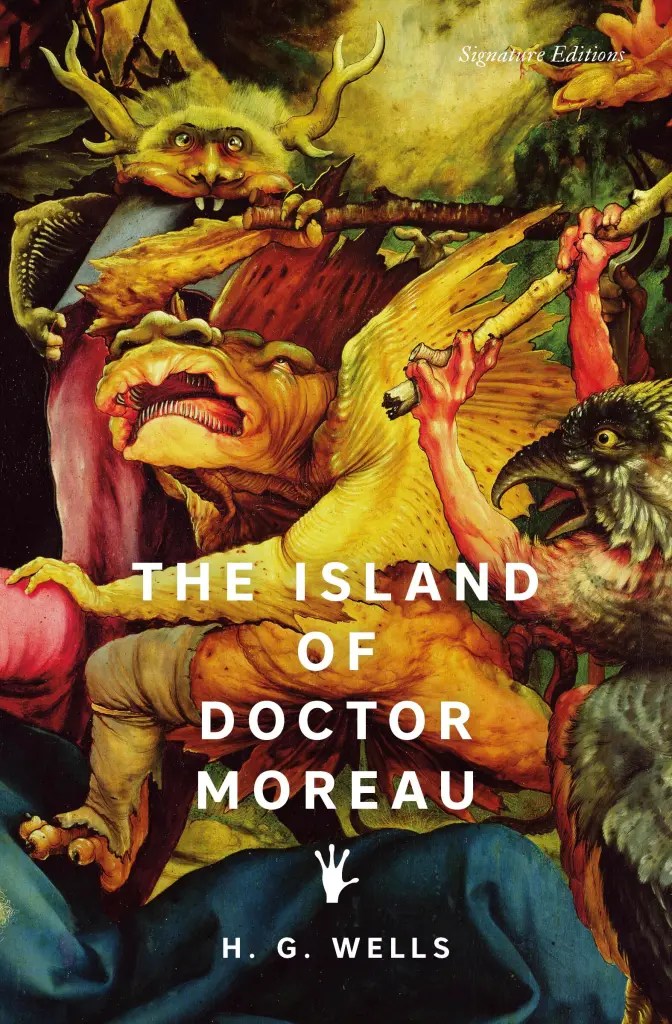
Image courtesy of Union Square & Co. Cover art elements from Matthias Grünewald’s Demons Armed with Sticks, Isenheim Alterpiece, c.1512-16.
Annotation
When Edward Prendick finds himself lost at sea, begging to be rescued by a mysterious ship bound for an island in the Pacific Ocean, nothing can prepare him for what comes next. Upon arrival, he is greeted by the strange residents of the island, among them Doctor Moreau – a prestigious surgeon driven out of London due to his experimentation in vivisection. As Prendick learns more about Doctor Moreau’s past, he comes to realize what the island’s residents truly are – animal hybrid creatures possessed with human-like qualities – deemed the “Beast Folk.” Prendick must learn to live with the Beast Folk if he is to survive on the island, but the longer he stays, the harder he finds it to distinguish between human qualities and animal instincts. The Island of Doctor Moreau is not only a page-turner, but a thought-provoking novel, inviting the reader to consider what really separates humans from animals.
Discussion
I never would have expected to enjoy the “mad scientist” trope so much; it is a genre I have never really explored outside of Disney Channel Originals in the 2000s. Reading this novel has changed my understanding of the science fiction genre – these types of stories often critique the current political, socioeconomic environment. In the case of The Island of Doctor Moreau, I found myself considering how people tend to distinguish between human rationality and animal instincts. I assume that Wells was addressing the scientific developments at the time, critiquing the urge to constantly “strive forward” without considering the ethics of one’s actions. Still today, many people place themselves on a separate plane of existence from the natural world – but how different from animals are we, really? What are the repercussions if we become too detached from nature? Despite being written in the late 19th century, this novel is still relevant today. I’m sure the library has no issue convincing sci-fi fans to read new releases, but by emphasizing the more though-provoking elements of sci-fi, I think they could draw in more readers.


You must be logged in to post a comment.